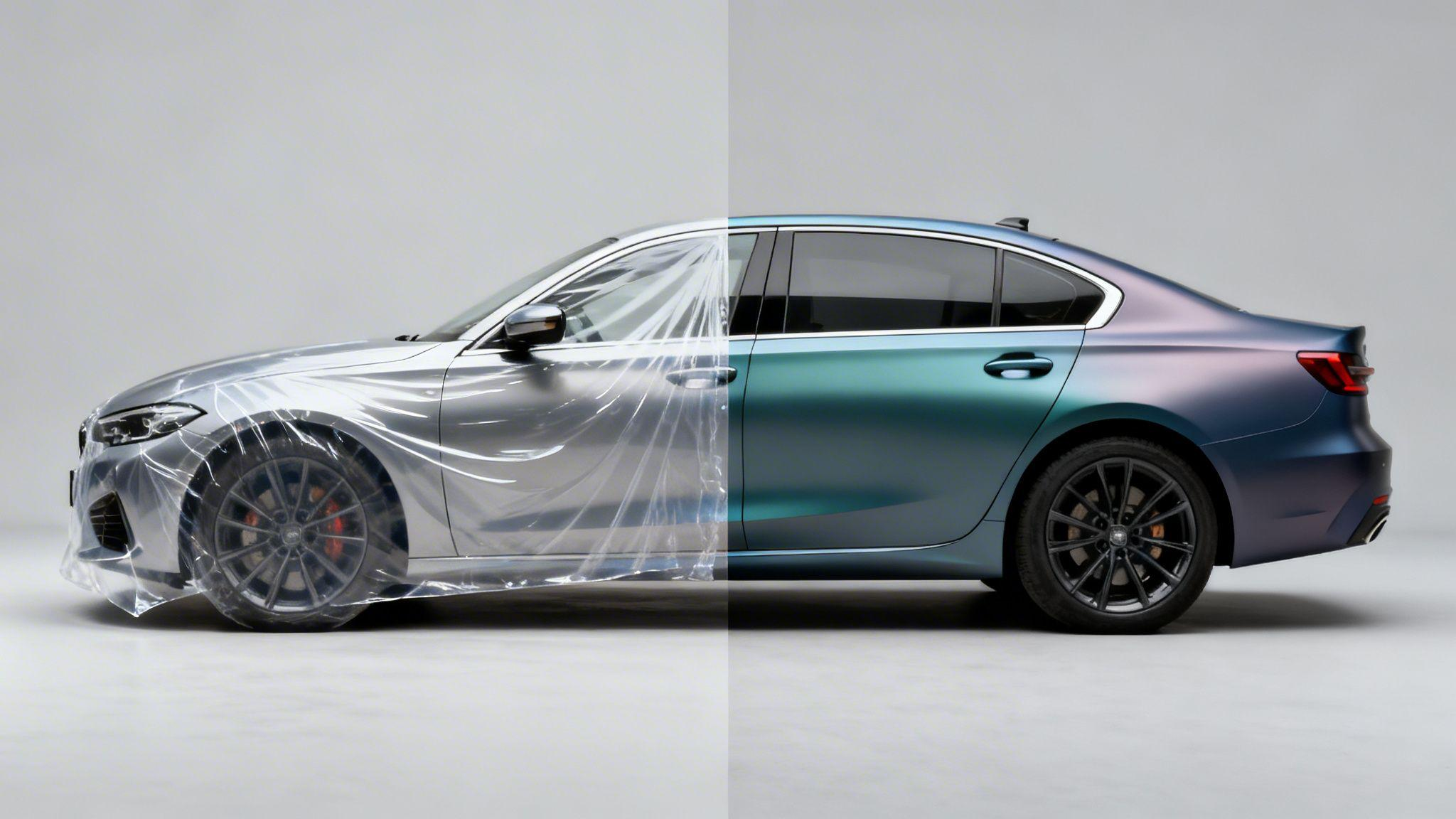
For automotive film importers, wholesalers, and distributors, choosing the right product portfolio is an important business decision.
Among the most recognized categories in the automotive film market are Paint Protection Film (PPF) and Color Change Film. Both serve the automotive aftermarket, but they address different customer needs and purchasing motivations.
PPF is primarily associated with protecting a vehicle's original paintwork, while Color Change Film allows vehicle owners to change the appearance of their cars.
For distributors, the question is not simply which product is better. It is which product category fits the local market, customer base, and business strategy.
This guide explores the differences between PPF and Color Change Film from a B2B purchasing perspective.
The first step is to understand why customers purchase each type of automotive film.
Paint Protection Film is designed to help protect a vehicle's painted surfaces from certain forms of everyday damage.
Customers interested in PPF may include:
Owners of new vehicles
Owners of premium or luxury cars
Customers who want to preserve original paintwork
Professional detailing and protection studios
Automotive businesses offering paint protection services
For distributors, PPF is a product category that connects closely with vehicle protection, paint preservation, and professional installation services.
When evaluating PPF opportunities, buyers should understand the local demand for paint protection services and the types of customers served by their installer network.
Color Change Film is designed to change a vehicle's exterior appearance without permanently repainting the original body color.
Its customers may include:
Car enthusiasts interested in personalization
Vehicle owners seeking a different appearance
Professional car wrapping studios
Customization businesses
Dealers and automotive styling service providers
Unlike PPF, which is mainly purchased for protection, Color Change Film is often selected based on color, finish, visual effect, and personal preference.
For distributors, this creates opportunities to serve customers looking for different styling options and finishes.
Although both products belong to the automotive film market, they have different sales characteristics.
| Business Factor | PPF | Color Change Film |
|---|---|---|
| Main purpose | Paint protection | Vehicle appearance customization |
| Common customer interest | Protecting original paint | Changing vehicle color and finish |
| Product selection | Technical specifications and performance information | Color, finish, appearance, and product specifications |
| Typical buyers | Protection and detailing studios | Car wrapping and customization studios |
| Sales conversation | Protection needs and product suitability | Color preferences and styling options |
| Key purchasing consideration | Consistent specifications and technical support | Color consistency and finish selection |
These differences influence how distributors introduce, promote, and sell each product category.
A distributor should not necessarily use the same sales approach for both product lines.
Market demand should guide your purchasing decisions.
Before adding PPF or Color Change Film to your portfolio, consider the characteristics of your target market.
Start with the customers you already serve.
Ask yourself:
Do your customers mainly operate detailing and paint protection businesses?
Are there many professional vehicle wrapping studios in your market?
Do customers frequently ask about paint protection or vehicle customization?
Are your existing buyers interested in expanding their service offerings?
If your customer network mainly focuses on vehicle protection, PPF may be a natural category to explore.
If your customers focus on vehicle styling and customization, Color Change Film may offer a relevant business opportunity.
If your network includes both types of businesses, you may have opportunities to develop both categories.
Market preferences can vary between countries and customer segments.
Some markets may have stronger demand for paint protection services, while others may show greater interest in vehicle customization.
Even within the same country, the preferences of professional installers, retail customers, and automotive businesses can differ.
Instead of relying only on general market trends, collect feedback from your existing customers and potential distributors.
Choosing a product category also means understanding the requirements of selling and supporting it.
When evaluating PPF for wholesale distribution, pay attention to:
Product specifications and available technical documentation
Film thickness and measurement methods
Appearance and surface characteristics
Adhesive-related information
Product samples and evaluation procedures
Warranty terms and after-sales arrangements
PPF buyers often need clear product information to communicate with professional installers and end customers.
A distributor should make sure that the product information provided by the supplier is sufficiently clear for the intended market.
For Color Change Film, product selection often involves a different set of questions:
Which colors are relevant to local customers?
Which finishes are popular among local wrapping studios?
Can the supplier provide clear color references?
Are samples available for evaluation?
Can color and finish information be communicated consistently?
What product specifications should be confirmed before ordering?
For this category, visual presentation and accurate product references can play an important role in the purchasing process.
Distributors should evaluate both the product itself and how effectively they can present it to their customers.
For some distributors, offering both categories can create a broader automotive film business.
The two products address different needs, which means they can complement each other rather than directly compete.
For example:
A distributor serving detailing studios may introduce PPF as a core product category.
A distributor working with car wrapping studios may focus on Color Change Film.
A distributor serving a broader automotive aftermarket customer base may consider both product categories.
Offering both products can also create opportunities to communicate with different types of professional installers.
However, expanding a product portfolio should be based on actual demand and business resources.
Before adding another category, consider:
Whether your existing customers have demand for it
Whether you have the technical knowledge to introduce it
Whether you can provide suitable product information and samples
Whether your sales team can explain the differences
Whether the additional product line fits your purchasing budget and business plan
A broader product range is not automatically a better product range. The goal is to offer products that your customers genuinely need.
Once you have identified the product categories you want to develop, the next step is to evaluate potential suppliers.
When sourcing PPF and Color Change Film, consider the following:
Check whether the supplier offers the product categories and specifications relevant to your market.
If you plan to source both PPF and Color Change Film, clarify which products are available and request the corresponding product information.
Ask for clear specifications, product descriptions, and available technical documentation.
This information helps your team compare products and communicate with downstream customers.
Samples allow your team to evaluate products before making larger purchasing decisions.
For PPF, focus on the relevant product characteristics and specifications.
For Color Change Film, review color references, surface finishes, and appearance.
A supplier should be able to understand your requirements and communicate important order details clearly.
Discuss quotation arrangements, packaging, order specifications, and after-sales communication before confirming your purchase.
Before choosing your next product category, review these questions:
Market Demand
Do my existing customers need PPF, Color Change Film, or both?
Which customer groups am I targeting?
What products are currently missing from my portfolio?
Product Suitability
Do the available specifications meet my market requirements?
Have I evaluated product samples?
Can I obtain clear product information?
Business Readiness
Can my sales team explain the differences between the products?
Can I support the customers who will purchase these products?
Does the new category fit my purchasing and distribution plan?
Supplier Evaluation
Can the supplier provide the required product information?
Are quotations and order specifications clear?
Can the supplier support communication throughout the purchasing process?
Answering these questions can help you make a more structured purchasing decision.
PPF and Color Change Film both offer opportunities in the automotive aftermarket, but they serve different customer needs.
PPF is primarily associated with protecting original paintwork, while Color Change Film focuses on vehicle appearance and customization.
For importers, wholesalers, and distributors, the right product choice depends on local demand, customer relationships, product suitability, and business capabilities.
Some businesses may benefit from focusing on one category first. Others may find opportunities in offering both products to different customer groups.
At TOPCAR, we focus on automotive film products including Paint Protection Film and Color Change Film. We welcome inquiries from importers, wholesalers, distributors, and automotive film businesses looking for product sourcing opportunities.
Looking to expand your automotive film product range? Contact TOPCAR to discuss your PPF or Color Change Film requirements and explore potential B2B cooperation.


